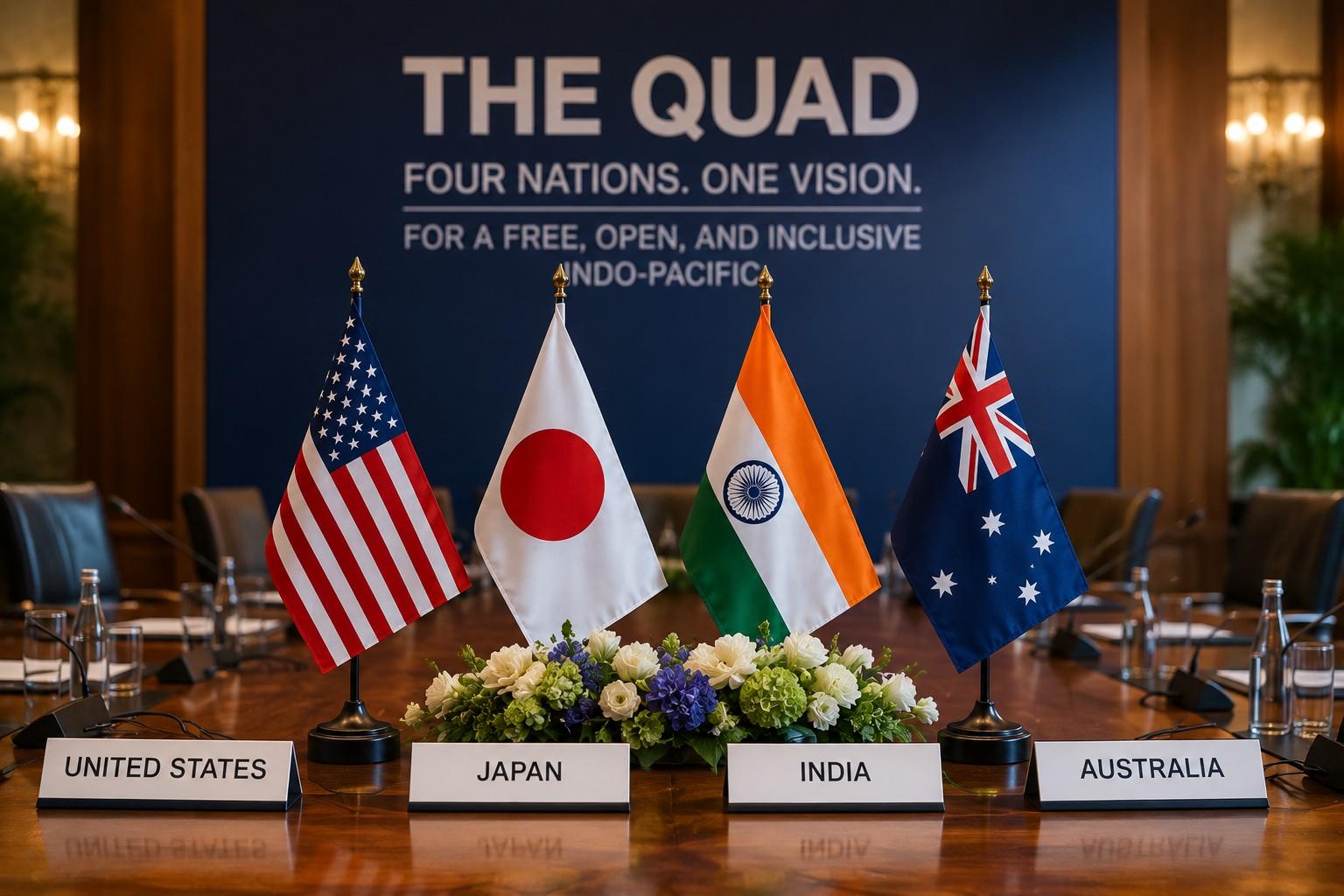
The Quad Explained 2026: What It Actually Does and Why India Joined
What the Quadrilateral Security Dialogue is, what it isn't, why India is in it despite 'strategic autonomy', and where India draws the line versus an 'Asian NATO'.
What the Quad actually is
The Quadrilateral Security Dialogue is the most visible product of a quiet revolution in Indian foreign policy. For four decades after Independence, India's reflex was non-alignment — formal independence from Cold War blocks, allergy to treaty commitments, principled distance from US-led groupings.
In 2017 and again in 2021, India formally committed to the Quad — a grouping that includes the United States, Japan, and Australia, and whose central purpose, however carefully it's phrased, is to balance China in the Indo- Pacific.
How that happened, what the Quad actually does, and where India draws the line, is one of the most important stories of Indian foreign policy in the 2020s.
The four phases of the Quad
Phase 1: Tsunami origins (2004-2007)
After the December 2004 Indian Ocean tsunami, the US Navy, Indian Navy, Japanese Maritime Self-Defence Force, and the Royal Australian Navy ran a joint humanitarian response — the Tsunami Core Group. It was operationally effective and politically novel: India was working military-to-military with US/Japan/Australia, in public.
The Quad-1 formed in 2007 under Japanese PM Shinzo Abe's initiative — formal meetings, the term "Quadrilateral Security Dialogue" coined, joint exercises (Malabar 2007). It dissolved within a year. Australia under PM Rudd withdrew, citing concerns about provoking China. India was lukewarm.
Phase 2: Dormancy (2008-2016)
For nine years the Quad effectively existed only in policy memos. India under both UPA and the first Modi term was cautious. The US under Obama prioritised G20 + economic engagement with China. Japan was the most committed Quad advocate but couldn't move alone.
Phase 3: Revival (2017-2020)
Three things converged: PM Abe's renewed Indo-Pacific framing, US Indo-Pacific Strategy (Trump administration), and increased Chinese assertiveness in the South China Sea and at the LAC. November 2017 saw working-level Quad talks resume in Manila.
The Galwan clash in June 2020 was a turning point. India's reflex of balancing carefully with China stopped working when 20 soldiers were killed. By October 2020, the Malabar exercise included all four navies — the first time since 2007.
Phase 4: Leader-level platform (2021-2026)
The first leader-level Quad summit was in March 2021. By 2026, the Quad runs:
- Annual leader summits (rotating host)
- Annual foreign ministers' meetings
- Working groups across six tracks
- Quad-led Malabar exercises (maritime)
- Quad Fellowship (100 students/year)
- Quad Investors Network (private capital coordination)
What the Quad actually does (six working groups)
| Working group | What it produces |
|---|---|
| Vaccines & Health | 1.2 billion COVID vaccine doses distributed to Indo-Pacific countries; ongoing biosecurity coordination |
| Critical & Emerging Technologies | Semiconductor supply-chain mapping; AI coordination; biotech governance |
| Climate | Climate finance pledges; clean-energy supply chain |
| Infrastructure | Quad Infrastructure Coordination Group; counter-BRI alternative financing |
| Cyber | Joint advisories; capacity-building for Indo-Pacific partners |
| Space | Earth-observation data sharing; STM (space traffic management) |
What it does NOT do:
- No mutual defence obligation
- No combined command structure
- No joint nuclear coordination (that's bilateral US-Japan, US-Australia, etc.)
- No troop deployments under Quad colours
- No fixed military presence
This matters because the realistic ceiling of the Quad is "very coordinated plurilateral cooperation", not "alliance". Treaty obligations would require Indian constitutional approval and a political shift that no Indian government has been willing to make.
Why India is in the Quad (and what it's calibrated for)
Indian membership is built on three pillars:
1. China balancing without alliance
The LAC crisis (see our China–India border explainer) made it clear that India needs partners. The Quad provides intelligence sharing, technology cooperation, and capacity-building without forcing India to join a treaty alliance. This is exactly what Indian doctrine wants.
2. Technology access
The US-India initiative on Critical and Emerging Technology (iCET), formally launched in 2023 and extended through 2026, gives India access to:
- Semiconductor design and manufacturing collaboration
- Defence technology transfers (Tejas engine GE F-414 production in India)
- Quantum and AI cooperation
- Joint space tech
These are not Quad-specific but the Quad provides the political ecosystem.
3. The Indo-Pacific framing
India embraces "Indo-Pacific" instead of "Asia-Pacific" — a framing that puts the Indian Ocean centrally on the map of regional security. This matters because:
- India's primary maritime theatre is the Indian Ocean
- Quad gives India a voice in Pacific issues without requiring naval presence there
- The framing legitimises India as a regional pole
See our Indo-Pacific strategy piece for how this plays out.
Where India draws the line
Three things India will not let the Quad become:
1. "Asian NATO"
The framing is rejected explicitly. Indian ministers have publicly said the Quad is "not anti-China"; this is partly true (the agenda is constructive) and partly the diplomatic register required to keep the Quad in a place where India is comfortable. Treaty mutual-defence is off the table for the foreseeable future.
2. Forum to align India's Russia / Iran posture
India's continued Russian oil purchases (see Russia–Ukraine and India's stake) and its relationship with Iran (port of Chabahar) are not subject to Quad coordination. India accepts dialogue but rejects pressure.
3. Anti-China rhetoric tool
When Quad statements emphasise "free and open Indo-Pacific" without naming China, India is comfortable. When statements move toward direct China condemnation, India pushes back to keep the language neutral. The 2024 and 2025 Quad summits saw careful Indian drafting to keep the rhetoric measured.
What Quad means for ordinary Indians
The Quad is far removed from daily life, but four things affect citizens directly:
- Vaccine access during pandemics — the Quad framework will be active for the next public health emergency
- iPhone and tech manufacturing in India — partly enabled by Quad-context supply-chain plays (Apple's Tamil Nadu plants)
- Quad Fellowship sends Indian STEM students to the US, Japan, Australia with full funding
- Defence equipment costs can come down as US tech transfer accelerates (Tejas Mk-2 engine, drones, missile systems)
Bottom line
The Quad is a careful Indian compromise: enough strategic balancing to constrain China, far less commitment than a treaty alliance, full preservation of strategic autonomy on issues India cares about (Russia, Iran, BRICS). It's the most consequential Indian foreign-policy realignment of the 2010s-2020s — but precisely because it was so carefully calibrated, ordinary Indians barely notice its existence.
For the broader picture, see our pieces on BRICS expansion 2026 and India's calculation, India's Indo-Pacific strategy, and India's neighbourhood-first policy.
Frequently asked questions
The Quadrilateral Security Dialogue is a diplomatic and strategic grouping of the United States, India, Japan, and Australia. Originally floated after the 2004 tsunami relief coordination, it lapsed for nearly a decade and was formally revived in 2017. It became a leader-level summit format in 2021. The Quad has no treaty, no headquarters, no joint command, and no Article-5-style mutual defence obligation. It is a coordination platform, not a military alliance.
Vikas
Founder & Editor
Founder of Bharat Sarvaseva. Writes on Indian taxes, government schemes, and citizen services with a focus on actually getting things done.
Related reading
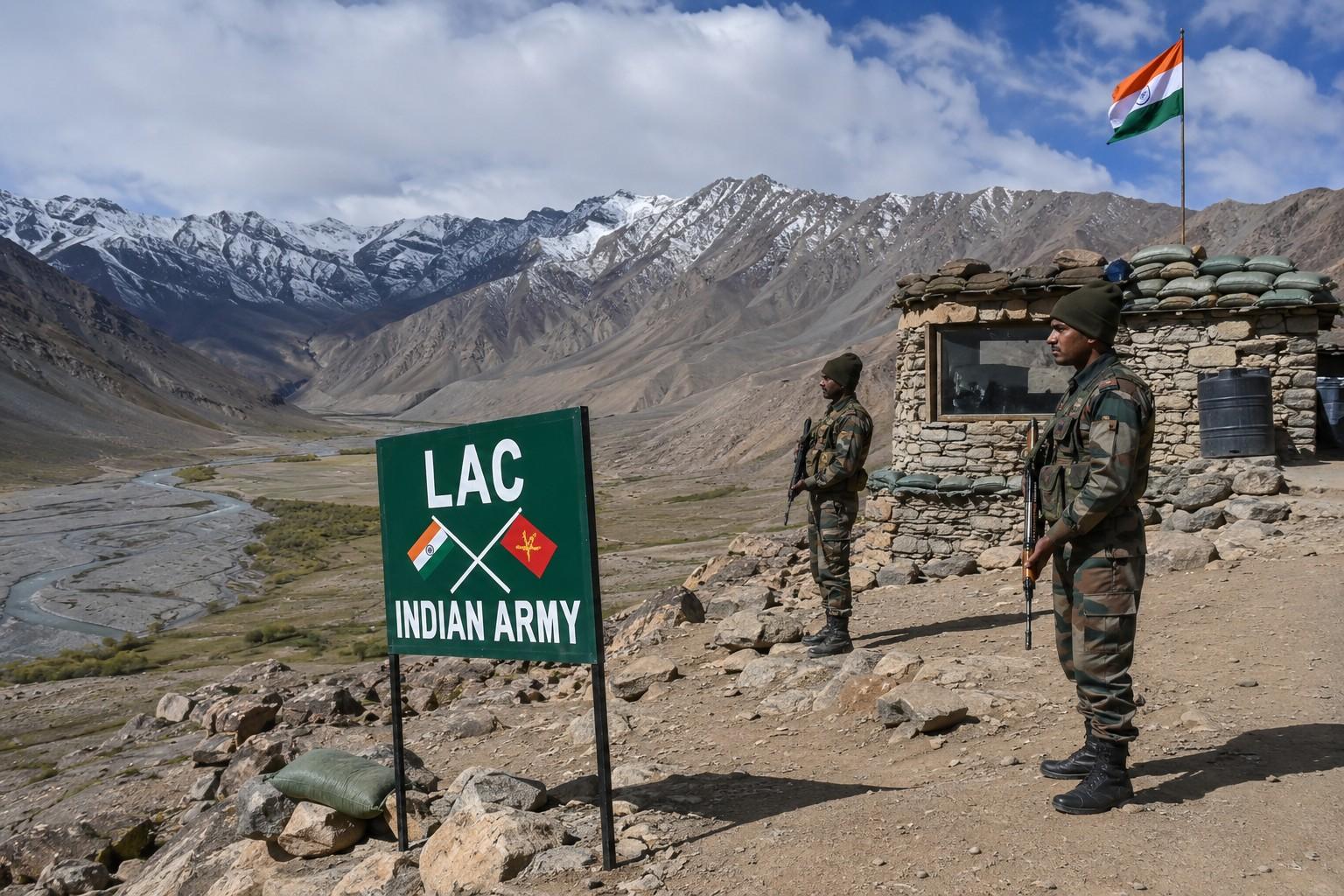
China–India LAC Tensions 2026: What's Actually Happening on the Border
Where the China–India border standoff actually stands in 2026 — the four friction points still active, disengagement vs de-escalation, and what 'managed rivalry' costs India.
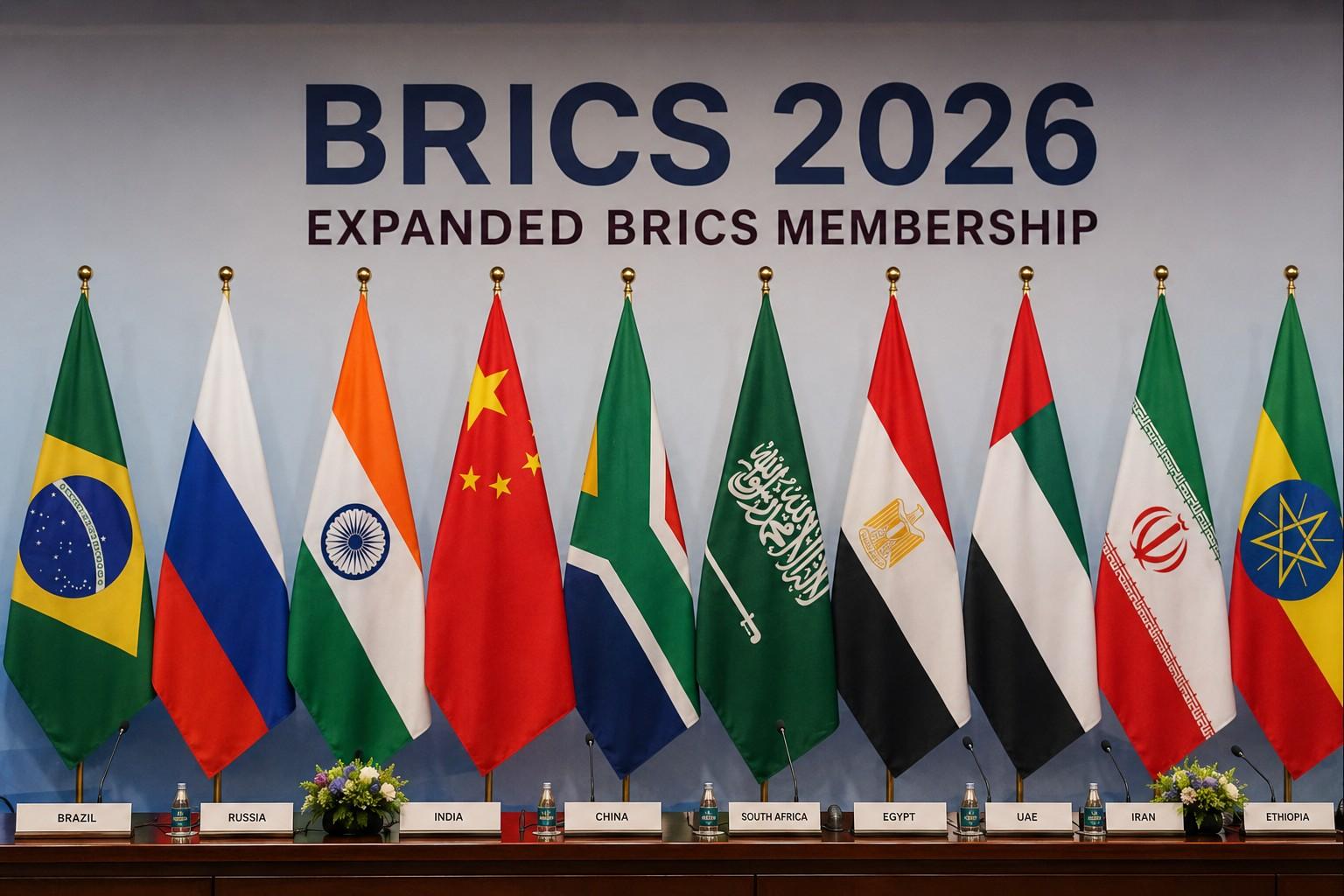
BRICS Expansion 2026: What India Actually Gets (and What It Doesn't Want)
How BRICS grew from 5 to 10+ members, why India agreed despite reservations, the 'BRICS currency' that isn't happening, and what India will and won't accept from the bloc.
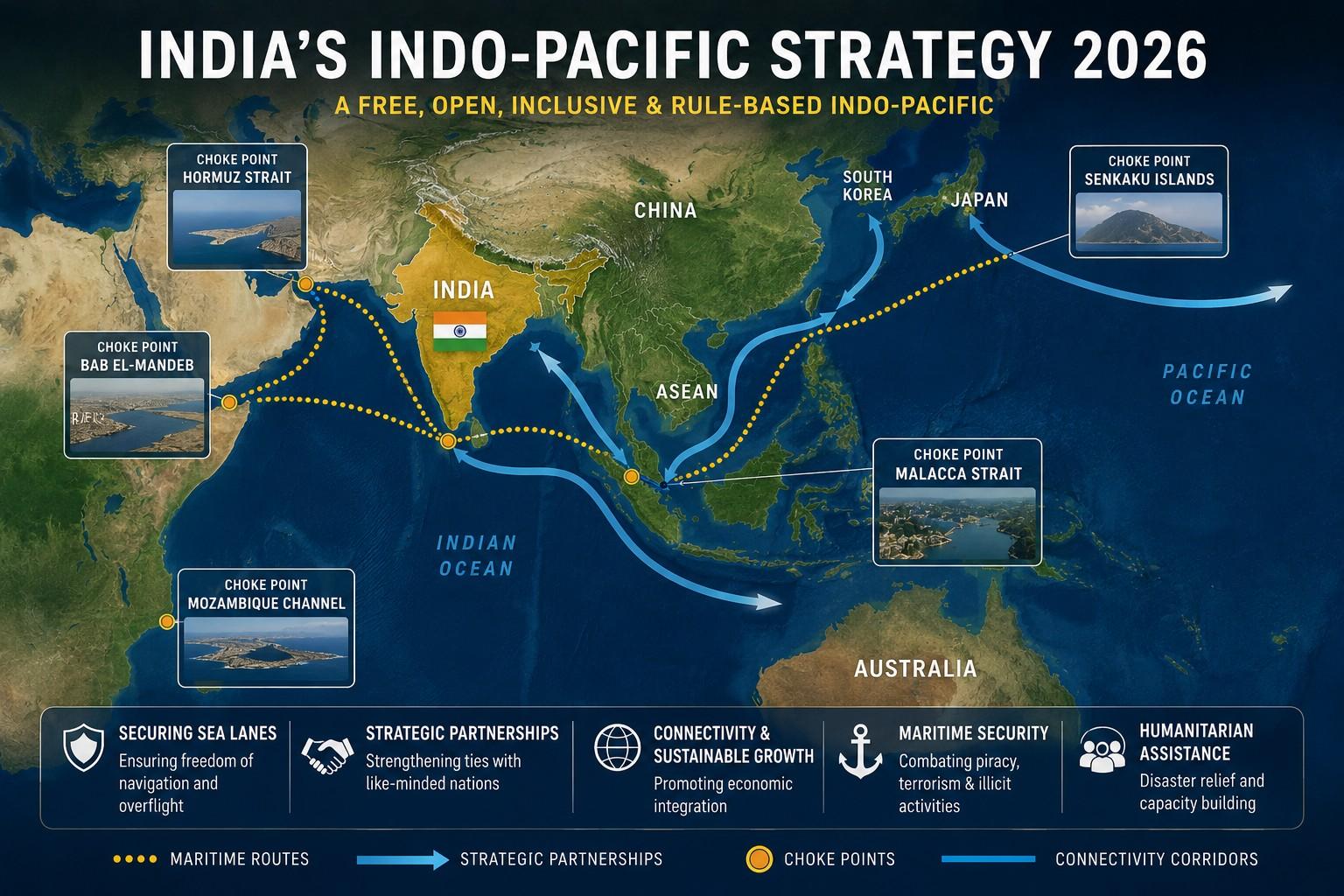
India's Indo-Pacific Strategy 2026: SAGAR, IMEC, and the New Maritime Map
Why India switched from 'Asia-Pacific' to 'Indo-Pacific', what SAGAR and IMEC actually do, and how India's maritime strategy now stretches from Mozambique to the South China Sea.