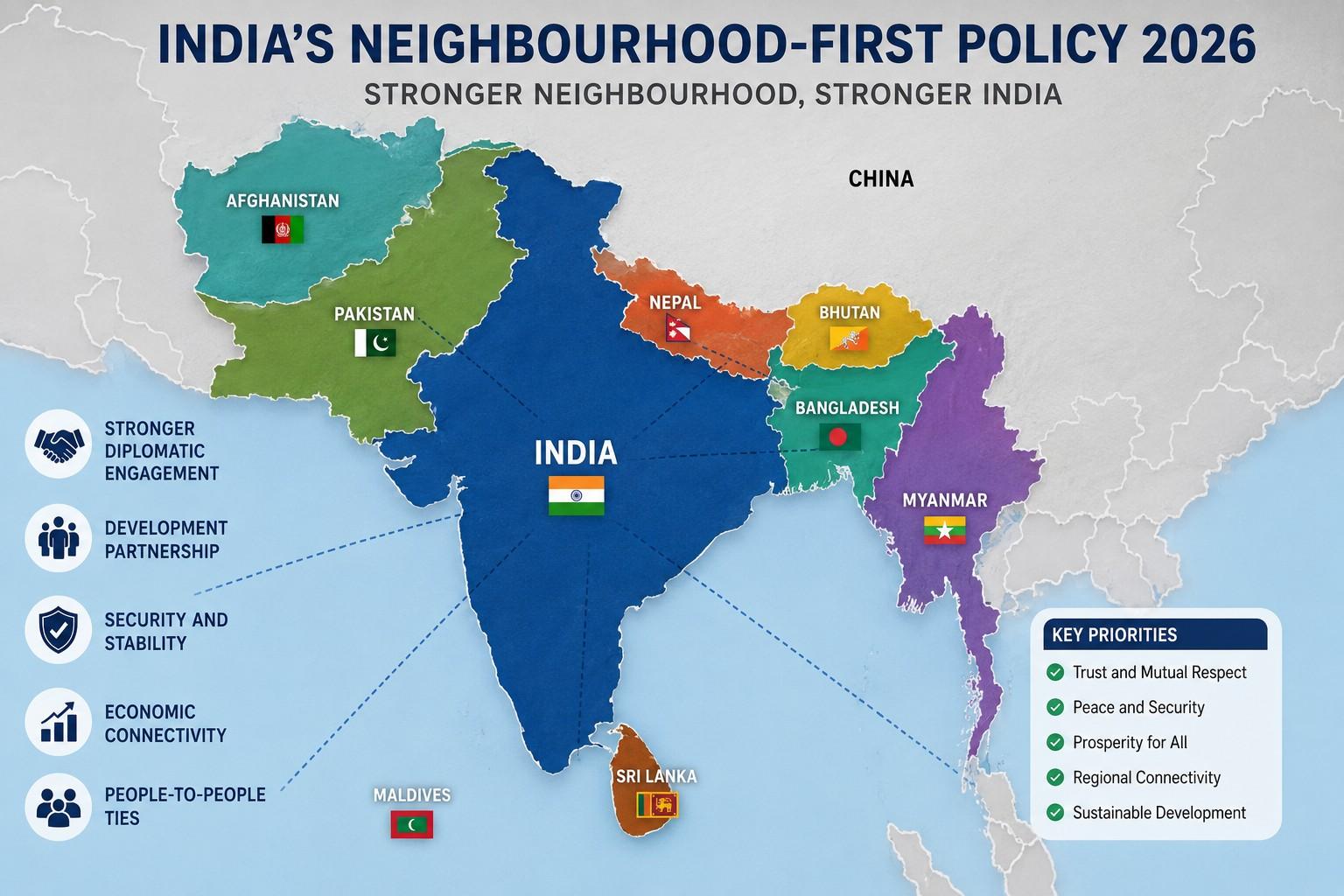
India's Neighbourhood-First Policy 2026: Where It's Working and Where It Isn't
How 'Neighbourhood First' works country by country in 2026 — the Sri Lanka recovery, the Maldives reset, the Bangladesh shock, the Bhutan gap, and the Pakistan deep freeze.
The doctrine and its constraints
When the Modi government took office in 2014, one of the early foreign-policy announcements was "Neighbourhood First" — a commitment to put South Asian relationships at the centre of Indian foreign policy. The opening signal was strong: PM Modi invited the heads of all SAARC countries to his inauguration, including PM Nawaz Sharif of Pakistan.
Twelve years later, in 2026, Neighbourhood First has had striking successes and conspicuous failures. The doctrine survives because India has no alternative — South Asia is India's geographic destiny — but the operational record has been more contested than the rhetoric suggests.
This is the country-by-country status report in 2026.
Sri Lanka — the post-crisis reset
In April 2022, Sri Lanka defaulted on its sovereign debt — the first South Asian country to default in the post-2000 era. Foreign reserves collapsed below $50 million. Fuel, food, and medicines disappeared from shelves. President Gotabaya Rajapaksa fled in July 2022.
India's response was decisive and consequential. Across 2022-2023:
- $4 billion in credit lines for fuel, food, fertiliser
- Currency swap of $400 million via RBI
- Fuel deliveries through Indian Oil Corporation
- Diplomatic protection at the IMF for Sri Lanka's bailout package
The total Indian assistance during the crisis exceeded what China provided during the same period — for the first time in two decades, India outpaced China in real terms in Sri Lanka.
The aftermath in 2024-2026:
- Trincomalee oil terminals being redeveloped jointly by Indian Oil Corporation and Sri Lankan partners
- Adani Group's $700 million West Container Terminal at Colombo Port operational
- New election cycle (2024 presidential, 2025 parliamentary) brought Anura Kumara Dissanayake (NPP / JVP) to power; despite earlier anti-establishment positioning, the new government has continued Indian cooperation projects
- Sri Lanka–India ETCA (Economic and Technology Cooperation Agreement) back on the table after a decade of stalled talks
The lesson Sri Lanka demonstrates: catastrophic crises in small neighbours can reset relationships in India's favour, but only if India shows up with real money fast.
Maldives — the Muizzu shock and reset
Mohamed Muizzu won the September 2023 Maldivian presidential election on an explicit "India Out" platform. His campaign demanded the withdrawal of approximately 75 Indian military personnel stationed at Maldivian assets (operating two Dornier surveillance aircraft and a search-and-rescue helicopter, primarily for medical evacuations and EEZ patrols).
The crisis peaked in January 2024 when three Maldivian deputy ministers posted derogatory comments about India and PM Modi on social media. India responded with quiet pressure: Indian tourism to the Maldives (then about ~13% of total tourist arrivals) dropped roughly 40% within weeks. Maldives GDP took the hit.
India withdrew the uniformed personnel by May 2024, replaced them with civilian technical staff (operating the same equipment), and let the diplomatic temperature cool.
By mid-2025:
- India had extended $400 million in budget support to the Maldives
- Currency swap arrangement of $400 million via RBI announced
- Adani Group infrastructure projects (housing, port modernisation) continued
- Indian tourism began recovering
By 2026, the relationship is normalised — not warm, but functional. The Muizzu government's posture has moderated, partly because Maldives' economic dependency on India proved more structural than the political rhetoric.
Bhutan — the closest relationship
Bhutan is India's most consistent strategic partner. The 1949 Friendship Treaty (updated 2007) gives India and Bhutan an exceptionally close relationship: India guides Bhutan's foreign policy on national-security issues, provides 75%+ of Bhutan's external aid, and underwrites Bhutan's hydropower exports.
Three things to watch:
China-Bhutan boundary talks
China and Bhutan have been negotiating their boundary for decades — Bhutan is one of two neighbours of China (with India) that has not formalised border arrangements with Beijing. Talks accelerated in 2021-2024. India is not party to these talks but has significant interest because the Doklam plateau (where India and China clashed in 2017) sits at the India-Bhutan-China trijunction.
The realistic outcome: a Bhutan-China boundary deal that swaps territory in northern Bhutan for territory closer to the trijunction is possible. A deal that worsens India's Doklam position is a worst-case scenario India is working diplomatically to prevent.
Hydropower partnership
Bhutan's economy runs on Indian-funded, Indian-built hydropower plants that sell electricity back to India. Three new mega-projects (Punatsangchhu I, Punatsangchhu II, Mangdechhu) have been completed or are in final stages. The 2026 hydropower export revenue makes up roughly 25% of Bhutan's GDP.
Gelephu Mindfulness City
Bhutan's $100 billion project (announced 2023) to build a new "mindfulness city" near the Indian border at Gelephu, with India-Bhutan rail connectivity and an international airport, is one of the most ambitious bilateral infrastructure plans in the region. Construction is multi-decade; the strategic signal is already clear.
Bangladesh — the Hasina shock
For fifteen years (2009-2024), Sheikh Hasina's Awami League government was India's closest South Asian partner. The relationship was unusually substantive:
- Border infrastructure: rail links, electricity grid, gas pipelines
- Trade and connectivity: Akhaura-Agartala rail, Bangladeshi ports access for Indian Northeast cargo
- Security: extradition of Indian insurgents, joint operations against cross-border terrorism
- Diplomatic alignment: at UN, in regional bodies
In July 2024, student protests against civil-service quotas escalated into a broader political crisis. On 5 August 2024, Hasina resigned and fled to India. An interim government led by Nobel laureate Muhammad Yunus took charge.
By 2026:
- Hasina remains in India (extradition refusal is a political wedge in India-Bangladesh relations)
- Yunus interim transitioned to elected government in early 2026
- Trade infrastructure continues; political comfort does not
- Anti-India sentiment in Bangladesh is significantly higher than during the Hasina period
- New Bangladesh government posture is "balanced" — working with India while opening to China
The 2024-2026 cooling is the single most consequential setback for Neighbourhood First in the entire 12-year run of the doctrine. Recovery is possible but multi-year.
Nepal — durable but friction-prone
India's relationship with Nepal is the deepest in South Asia by every measure — shared open border (1,751 km), Hindi-Nepali linguistic adjacency, intense people-to-people ties (Nepalis serve in the Indian Army's Gurkha regiments, Indian businesses dominate the Nepali market), shared electricity grid.
The friction points:
- Kalapani / Lipulekh boundary dispute — Nepal's 2020 constitutional amendment added contested territories to its official map. India did not recognise the change. The issue is dormant but unresolved.
- Constitutional politics — periodic friction over India's perceived role in Nepali constitutional crises (2015 amendment, several since)
- China factor — Nepal has accepted multiple Chinese infrastructure projects under the BRI framework; India's response has been to deepen bilateral cooperation rather than block Chinese involvement
The 2024-2026 period has been notably stable: PM Pushpa Kamal Dahal's government and successor governments have maintained working relations with both India and China without forcing a choice. India's "no big bang" approach has worked.
Pakistan — the deep freeze
India-Pakistan relations have effectively been in deep freeze since the Uri attack in September 2016. The trajectory:
- 2016: Uri attack; India's surgical strikes
- 2019: Pulwama attack; India's Balakot air strike
- 2019: Article 370 revocation in J&K; Pakistan suspended bilateral trade
- 2020: COVID; no high-level contact
- 2021-2025: No SAARC, no bilateral talks, no cultural exchange, no cricket bilateral
By 2026:
- Trade: minimal (only via third countries)
- SAARC: dormant
- Track-1.5 talks: nominal
- Visas: severely restricted
- Indus Waters Treaty: India announced suspension in 2024-2025 amid cross-border terrorism concerns; situation fluid
The structural reality: no Indian government can normalise with Pakistan without a credible Pakistani security guarantee against cross-border terrorism, which no Pakistani government has been able to provide. The freeze is mutual and stable.
Myanmar — engagement is impossible
The February 2021 military coup by the Tatmadaw ended democratic Myanmar. The subsequent civil war (ongoing through 2026) makes deep Indian engagement impossible. India:
- Continues limited humanitarian access via the northeast border
- Maintains a working relationship with the junta on security cooperation (counter-insurgency on the India-Myanmar border)
- Has not publicly recognised the junta as legitimate
- Has constrained engagement on infrastructure (Kaladan multi-modal transit project) due to security and access concerns
India's calculation: a chaotic Myanmar is bad for India's Northeast security, but engagement with the junta beyond minimum-necessary would trigger Western criticism and damage broader strategic positioning.
SAARC vs BIMSTEC — the institutional shift
The South Asian Association for Regional Cooperation (SAARC), founded in 1985, has not had a summit since 2014. Pakistan is the structural blocker; India has been unwilling to participate while cross-border terrorism continues.
India's institutional shift:
- BIMSTEC (Bay of Bengal Initiative for Multi-Sectoral Technical and Economic Cooperation): India, Bangladesh, Bhutan, Sri Lanka, Nepal, Myanmar, Thailand. No Pakistan. Active. 2022 BIMSTEC charter adopted, formalising the organisation.
- BBIN (Bangladesh, Bhutan, India, Nepal): sub-regional grouping for cross-border road connectivity. Operational on multiple corridors.
- Bilateral: India increasingly works neighbour-by-neighbour rather than through multilateral SAARC.
BIMSTEC isn't quite SAARC's replacement — it includes Thailand and Myanmar, neither in South Asia proper. But it is the institutional vehicle India is investing in.
Bottom line
Neighbourhood First in 2026 is a mixed report card:
- Successful with Sri Lanka, Bhutan, Maldives (after rough patch): India has shown up with real money, real diplomacy, and real continuity
- Cooled with Bangladesh: Hasina's ouster is a structural setback
- Stable with Nepal: friction is permanent but contained
- Frozen with Pakistan: no near-term thaw
- Stalled with Myanmar: civil war makes engagement impossible
The doctrine works when India can provide what neighbours need — money, infrastructure, security cooperation — and when neighbouring politics doesn't actively pivot away. Both conditions are sometimes met and sometimes not.
For India's broader foreign-policy positioning around the South Asian neighbourhood, see our pieces on India's Indo-Pacific strategy, the Quad, and BRICS expansion 2026. For the China dimension that affects every South Asian neighbour, see China–India LAC tensions.
Frequently asked questions
Neighbourhood First is the doctrine — formally adopted by the Modi government in 2014 — that India's relationships with its immediate South Asian neighbours (Bangladesh, Bhutan, Maldives, Myanmar, Nepal, Sri Lanka, and Pakistan) get priority over more distant foreign-policy objectives. The doctrine has five operational principles: connectivity (rail, road, energy), capacity-building (training, technology transfer), commerce (trade preferences), culture (people-to-people, education), and consultation (asymmetric responsiveness — India makes the first concession when it matters).
Vikas
Founder & Editor
Founder of Bharat Sarvaseva. Writes on Indian taxes, government schemes, and citizen services with a focus on actually getting things done.
Related reading
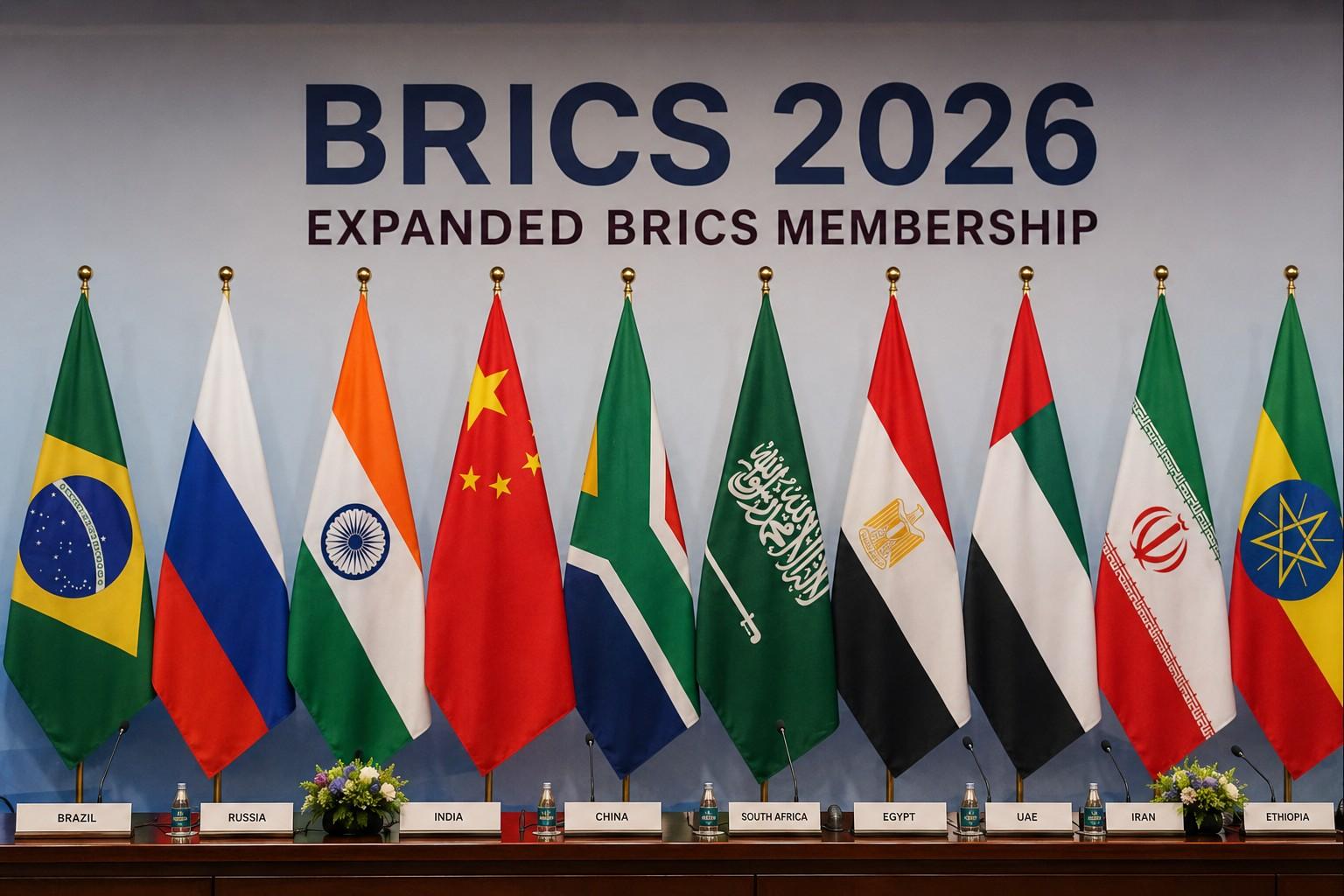
BRICS Expansion 2026: What India Actually Gets (and What It Doesn't Want)
How BRICS grew from 5 to 10+ members, why India agreed despite reservations, the 'BRICS currency' that isn't happening, and what India will and won't accept from the bloc.
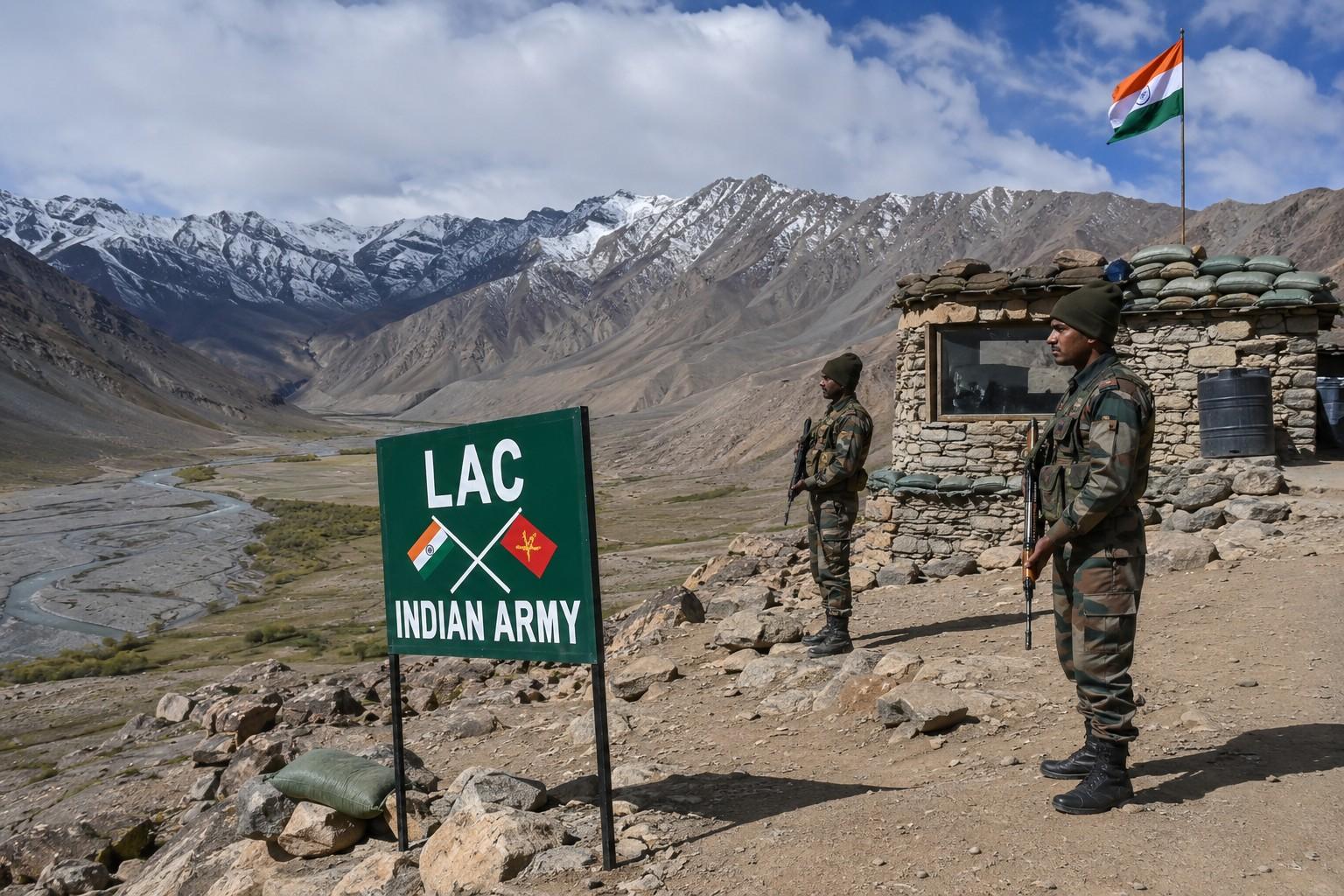
China–India LAC Tensions 2026: What's Actually Happening on the Border
Where the China–India border standoff actually stands in 2026 — the four friction points still active, disengagement vs de-escalation, and what 'managed rivalry' costs India.
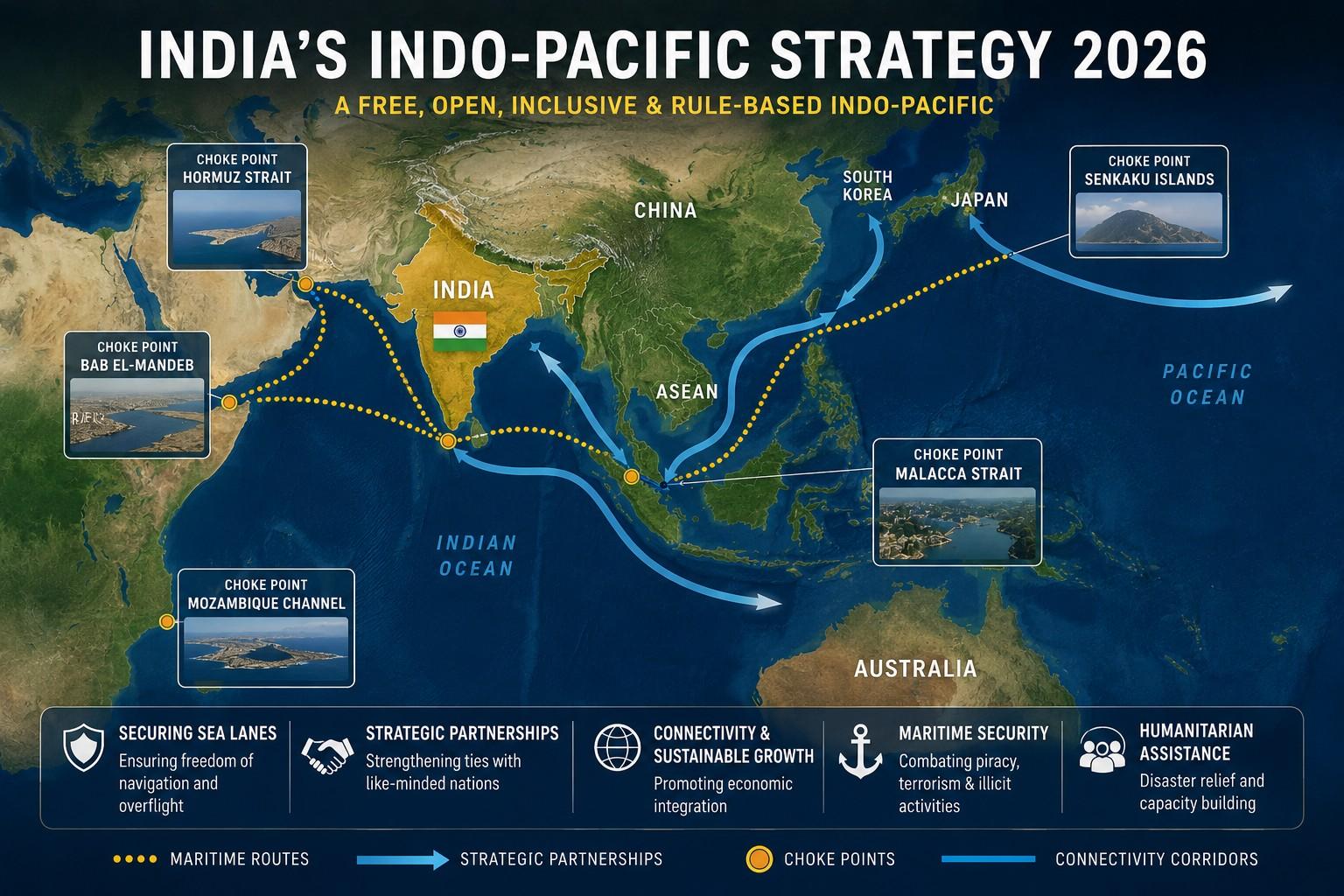
India's Indo-Pacific Strategy 2026: SAGAR, IMEC, and the New Maritime Map
Why India switched from 'Asia-Pacific' to 'Indo-Pacific', what SAGAR and IMEC actually do, and how India's maritime strategy now stretches from Mozambique to the South China Sea.