BRICS Expansion 2026: What India Actually Gets (and What It Doesn't Want)
How BRICS grew from 5 to 10+ members, why India agreed despite reservations, the 'BRICS currency' that isn't happening, and what India will and won't accept from the bloc.
How BRICS grew
In June 2001, Goldman Sachs analyst Jim O'Neill coined the term "BRIC" to describe four large emerging economies — Brazil, Russia, India, China — that he predicted would become major global powers by 2050. South Africa was added in 2010 to make BRICS. For thirteen years, the membership stayed at five.
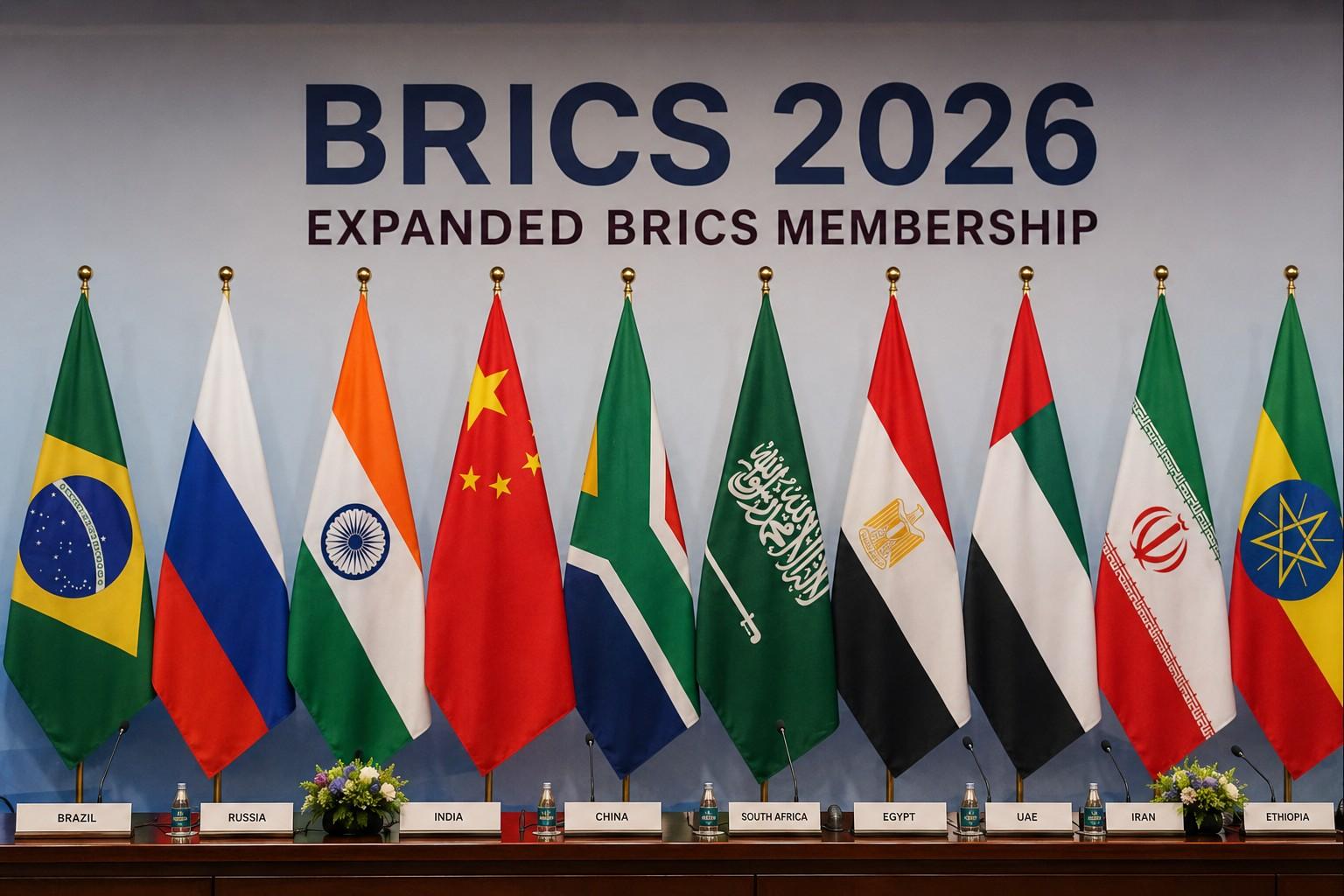
Then, in January 2024, BRICS doubled its membership. Iran, the UAE, Egypt, and Ethiopia formally joined. Saudi Arabia was invited but delayed and ultimately didn't formally accept. Argentina was invited and withdrew under Javier Milei's government. By 2026, with subsequent partner-country tiers created at the Kazan (October 2024) and Rio (July 2025) summits, BRICS has become the most consequential non-Western multilateral platform.
For India, the expansion is a mixed blessing — and a much more complicated balancing act than the original five-member version was.
BRICS membership in 2026
| Country | Joined | Population | Approx GDP (USD) |
|---|---|---|---|
| Brazil | 2009 | 215 M | $2.1 trillion |
| Russia | 2009 | 144 M | $2.0 trillion |
| India | 2009 | 1.43 B | $4.0 trillion |
| China | 2009 | 1.41 B | $18 trillion |
| South Africa | 2010 | 60 M | $0.4 trillion |
| Egypt | Jan 2024 | 110 M | $0.4 trillion |
| Ethiopia | Jan 2024 | 125 M | $0.16 trillion |
| Iran | Jan 2024 | 89 M | $0.4 trillion |
| United Arab Emirates | Jan 2024 | 10 M | $0.5 trillion |
Combined: roughly 3.6 billion people (45% of global population), about $28 trillion in combined GDP, and approximately 40% of global oil production (once Iran, UAE, Russia, and Saudi-adjacent flows are counted).
The partner-country tier — Indonesia, Nigeria, Türkiye, Vietnam, others — sits below full membership but participates in working groups.
Why India agreed to expansion (and how reluctantly)
India had reservations about all of the major expansion candidates and agreed to expansion only after specific Indian concerns were addressed.
Iran: India had a stake in Iran's Chabahar port and Iran is a major crude supplier, but Iran's inclusion risked making BRICS look anti-Western and complicating India's relationships with the US and Israel. India's red line was that Iran's membership not include automatic Iranian endorsement of, or expectations from, India on Iran-Israel-US issues. That red line held.
Saudi Arabia (invited but didn't join): India was supportive — Saudi is a major energy partner. The non-joining was Saudi's own choice, partly to preserve flexibility with the US.
UAE: Easy for India to support — major trade and remittance partner, 3.5 million-strong Indian diaspora, Indian rupee-UAE dirham bilateral trade settlement already operational.
Egypt and Ethiopia: Both added Global South representation, both acceptable to India.
The key calculation: India would rather be inside a larger BRICS shaping its agenda than outside it watching China set the direction unchallenged.
What India will not accept from BRICS
Three explicit positions:
1. No common currency
A common BRICS currency would require participating economies to give up monetary autonomy — fixing exchange rates, possibly fiscal-policy coordination. India has $700+ billion in forex reserves, an independent central bank (RBI), and a managed-float rupee. The political and economic cost of joining a common currency is unacceptable.
Russia and China occasionally push the common-currency idea (it would reduce dollar dependence). India publicly opposed it at the 2023 Johannesburg summit and again at 2024 Kazan. The agenda has stayed off.
2. No anti-US framing
BRICS communiqués occasionally veer toward language critical of Western "unilateral sanctions" or "rules-based order". India accepts measured critique but pushes back against framing that would force India to choose between BRICS and the Quad / US. The result is communiqués that are vague enough to satisfy both Russia's preferences and India's red lines.
3. No automatic India-China alignment
China would prefer BRICS to function as a coordination platform on issues where China and India align (e.g., G20 reforms, climate finance from the West). India accepts cooperation where interests overlap but rejects any framework that implies India aligns with China on contested issues — border, Quad, technology export controls.
What India wants from BRICS
Three concrete deliverables:
1. New Development Bank financing
The NDB, headquartered in Shanghai, lends in local currencies for infrastructure and sustainable-development projects. India has been the biggest borrower: $7.4 billion in approved loans through 2025 for rail, urban infrastructure, and clean energy. The NDB is a real alternative to World Bank conditionality.
2. Energy-trade diversification
BRICS expansion includes the world's major oil producers: Russia, UAE, Iran (with Saudi adjacent). India can negotiate longer-term oil deals, hedge against price shocks, and access local-currency settlement to reduce dollar exposure on energy imports.
This connects directly to the Russian oil discount story — see Russia– Ukraine and India's stake.
3. Global South leadership
India has positioned itself as the "voice of the Global South" through hosting G20 (2023), the Voice of Global South Summit, and active African Union outreach. BRICS membership reinforces this. India's calculation: a seat at the table on Global South issues matters as the World Bank and IMF slowly evolve.
The China problem inside BRICS
The biggest Indian challenge in BRICS is structural: China dominates by GDP. Chinese economy is ~$18 trillion. The next-largest BRICS member (India) is ~$4 trillion. By size, China is bigger than all other BRICS members combined.
That creates a constant gravitational pull:
- NDB based in Shanghai, current president Chinese
- Most BRICS payment-system proposals have Chinese technology preferences
- China is the largest BRICS economy and tends to set the financial agenda
India's counter has been deliberate political effort: hosting BRICS in 2021 and 2026, pushing for distributed institutional homes (the NDB Africa regional office in Johannesburg, NDB Americas in Brazil), and maintaining strong bilateral ties with Brazil, South Africa, Egypt, UAE to balance the Beijing weight.
The ongoing LAC reality (see China–India LAC tensions) makes this balancing more sensitive. India sits across the table from China at BRICS while simultaneously deploying 70,000 troops opposite Chinese forces in Ladakh. Both can be true.
India's BRICS calculation, summarised
India is in BRICS because:
- It legitimises India as a non-Western multilateral leader
- The NDB provides infrastructure finance on better terms than the World Bank
- Bilateral relationships within BRICS (with Russia, Brazil, UAE, Egypt) matter more than the bloc itself
- Being absent would let China set the agenda alone
India is in the Quad because:
- The LAC reality requires strategic balancing
- US technology partnerships (iCET) are valuable
- The Indo-Pacific framing gives India a regional pole status
These two memberships will continue to coexist. Anyone framing them as "contradictory" is using a Cold War mental model that India explicitly rejected when it embraced multi-alignment.
Bottom line
BRICS expansion gives India more leverage and more headaches in equal measure. The leverage: a bigger Global South platform, more energy diversification, more NDB financing capacity. The headaches: more diplomatic management, more Western suspicion, more careful drafting on every communiqué.
For Indian citizens, BRICS shows up in concrete ways: rupee-dirham trade with the UAE, cheaper Russian oil flowing into Indian refineries, NDB loans funding metro rail in Bengaluru and Mumbai. These are real, ongoing, and accumulating.
For the rest of the geopolitics picture, see the Quad explained, India's Indo-Pacific strategy, and India's neighbourhood-first policy.
Frequently asked questions
As of 2026 BRICS has expanded substantially from the original five. Founding members: Brazil, Russia, India, China, South Africa. Added January 2024: Egypt, Ethiopia, Iran, United Arab Emirates. (Saudi Arabia was invited but never formally joined; Argentina was invited but withdrew before joining.) Additional partner-country tiers were created at the Kazan summit (October 2024) and Rio summit (July 2025) covering Indonesia, Nigeria, Türkiye, Vietnam and others without full membership.
Vikas
Founder & Editor
Founder of Bharat Sarvaseva. Writes on Indian taxes, government schemes, and citizen services with a focus on actually getting things done.
Related reading
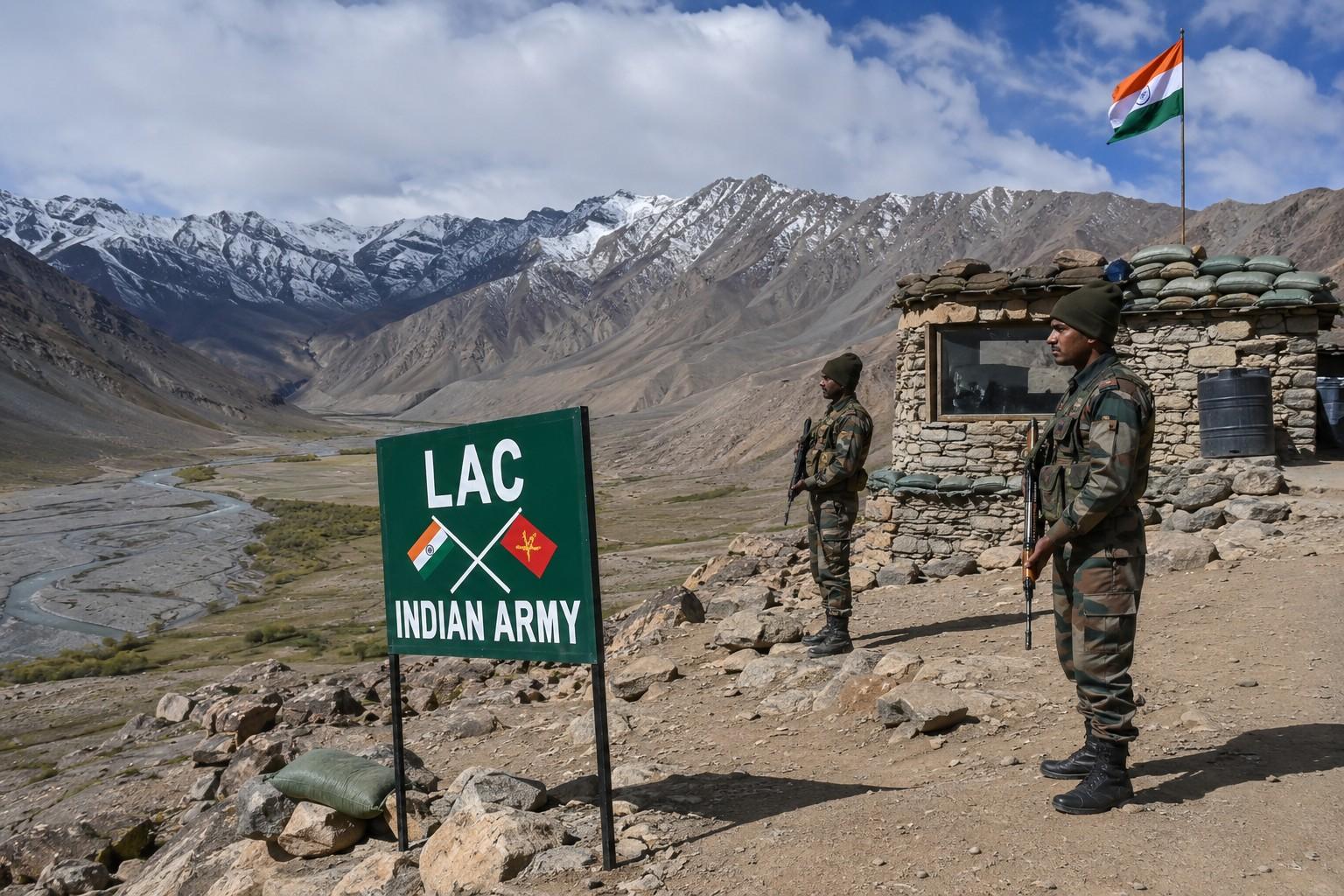
China–India LAC Tensions 2026: What's Actually Happening on the Border
Where the China–India border standoff actually stands in 2026 — the four friction points still active, disengagement vs de-escalation, and what 'managed rivalry' costs India.
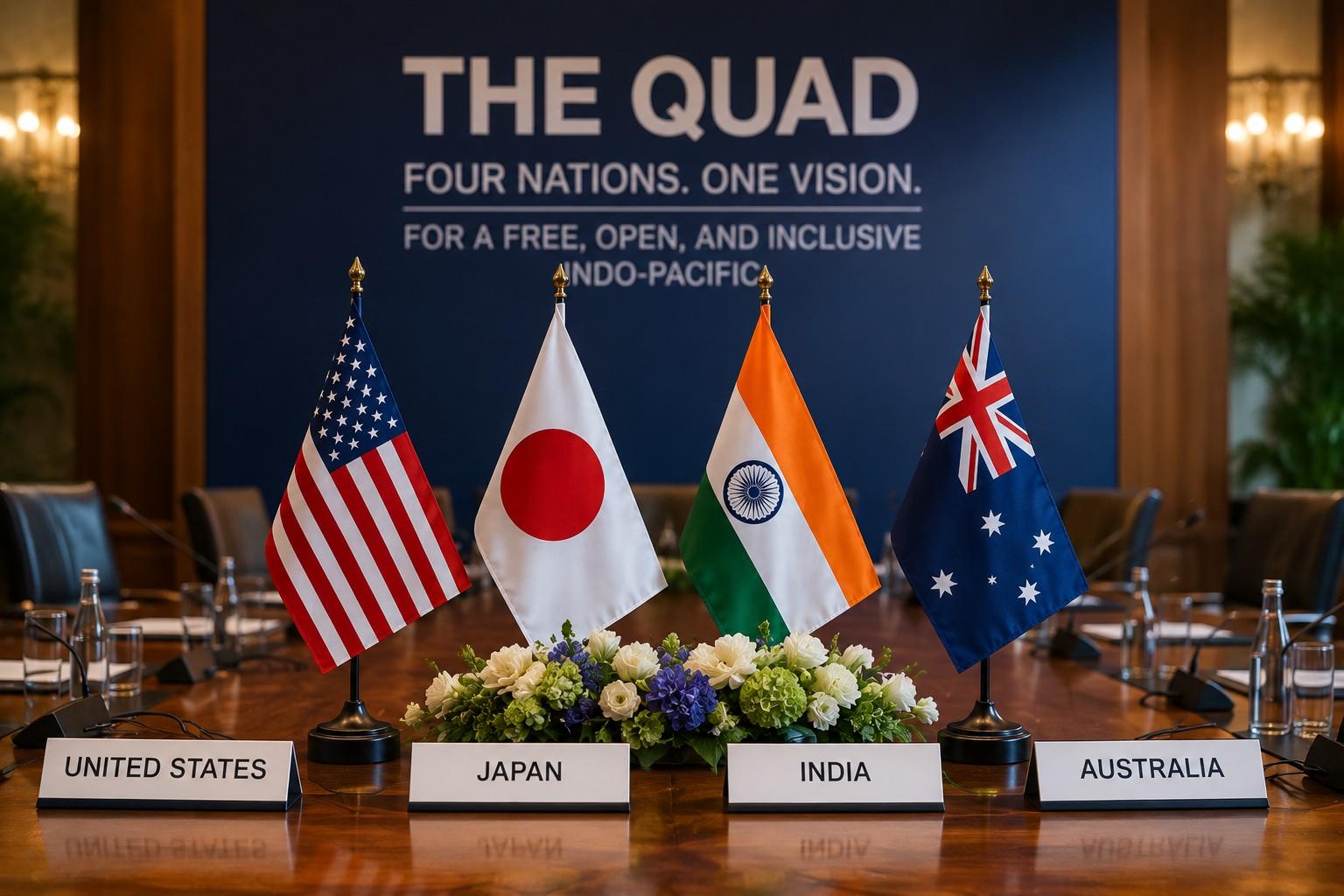
The Quad Explained 2026: What It Actually Does and Why India Joined
What the Quadrilateral Security Dialogue is, what it isn't, why India is in it despite 'strategic autonomy', and where India draws the line versus an 'Asian NATO'.

Russia–Ukraine War 2026: Where India Stands and What It Costs Us
Why India hasn't picked a side in the Russia–Ukraine war, the discount-oil dividend that's saved us ₹3 lakh crore, and the four ways the war still touches Indian households.