Old vs New Tax Regime 2026: Salary-Wise Calculator (₹5L to ₹50L)
Salary-wise calculator + decision rules for choosing between old and new tax regime in 2026 — what you actually save at ₹5L, ₹10L, ₹20L, and ₹50L income, with the 30-second decision shortcut.
The 30-second answer
Most articles bury the lede in 2,000 words of context. Here's the decision in one paragraph:
Add up your deductions: 80C (₹1.5L max), 80D (₹25K–₹75K), HRA (varies), home loan interest (₹2L max), NPS (₹50K), and standard deduction (₹75K). If the total exceeds ~₹3.5 lakh, stay on the old regime. If under ₹3 lakh, switch to the new regime. Between ₹3–3.5 lakh, run the actual numbers because the answer flips depending on your slab.
That's the whole article in one paragraph. Read on if you want the salary-wise comparison and the edge cases that trip everyone up.
The slabs in 2026 — side by side
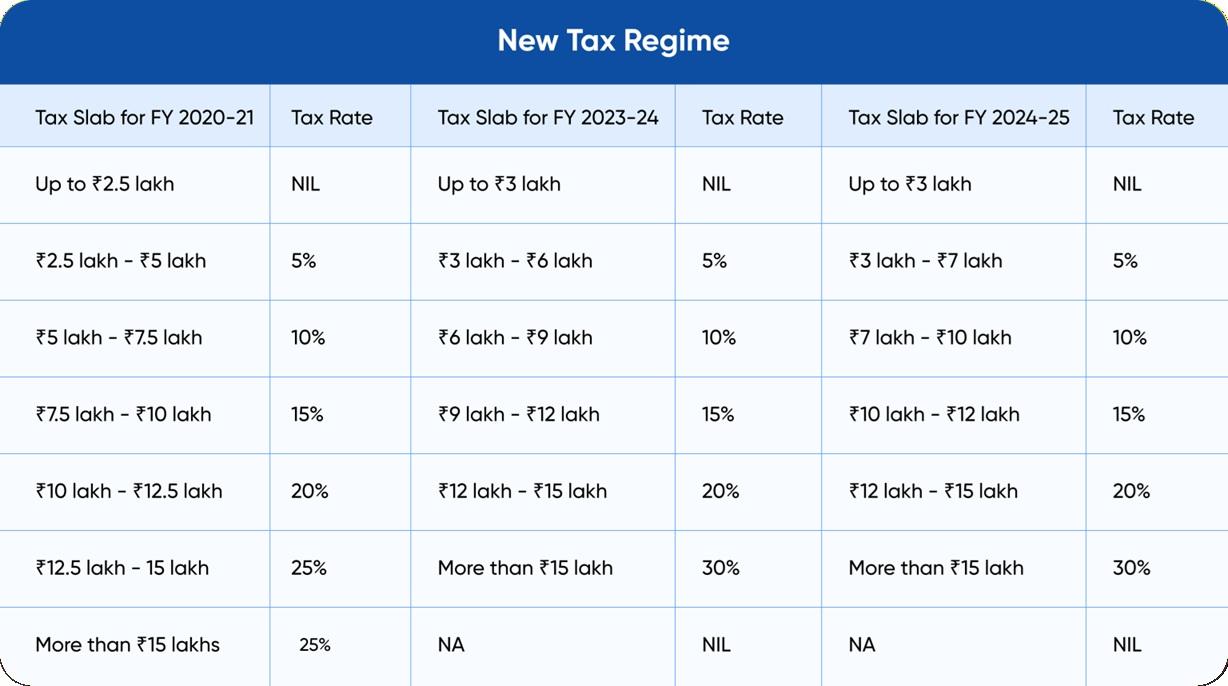
Update slabs and rebate values from the latest Finance Act before publishing. These reflect the FY 2024–25 / AY 2025–26 structure as of last notification.
New tax regime (default)
| Income slab | Tax rate |
|---|---|
| Up to ₹3 lakh | Nil |
| ₹3 lakh – ₹7 lakh | 5% |
| ₹7 lakh – ₹10 lakh | 10% |
| ₹10 lakh – ₹12 lakh | 15% |
| ₹12 lakh – ₹15 lakh | 20% |
| Above ₹15 lakh | 30% |
- Standard deduction: ₹75,000 (salaried)
- Rebate under 87A: full tax up to ₹7 lakh income → effectively no tax
- Surcharge: 10–25% (capped at 25% in new regime)
Old tax regime
| Income slab | Tax rate |
|---|---|
| Up to ₹2.5 lakh | Nil |
| ₹2.5 lakh – ₹5 lakh | 5% |
| ₹5 lakh – ₹10 lakh | 20% |
| Above ₹10 lakh | 30% |
- Standard deduction: ₹50,000 (salaried)
- Rebate under 87A: full tax up to ₹5 lakh income
- All deductions available: 80C, 80D, HRA, home loan interest, etc.
- Surcharge: 10–37%
The old regime's slab structure looks worse — it really is, on raw numbers. The advantage comes entirely from deductions.
Salary-wise comparison
Realistic deduction profiles for a typical Indian salaried professional:
Replace these with verified numbers using the Income Tax Department's official calculator before publishing.
At ₹5 lakh income
Deductions used (old regime): ₹50K standard + ₹50K (80C minimum, e.g. EPF) = ₹1 lakh New regime tax: ₹0 (rebate applies up to ₹7L) Old regime tax: ₹0 (rebate applies up to ₹5L taxable)
Winner: Tie (₹0 either way). New regime is administratively simpler.
At ₹10 lakh income
Deductions used (old regime): ₹50K standard + ₹1.5L (80C) + ₹25K (80D)
- ₹1.2L (HRA, mid-tier metro) = ₹3.45 lakh New regime tax: approx ₹54,000 Old regime tax (with above deductions): approx ₹46,000
Winner: Old regime by ~₹8,000 — assuming you actually use the deductions. If you don't claim HRA, the new regime wins by ~₹15,000.
At ₹15 lakh income
Deductions used (old regime): ₹50K + ₹1.5L + ₹50K (80D family) + ₹2.4L (HRA metro) + ₹2L (home loan interest) + ₹50K (NPS) = ₹7.4 lakh New regime tax: approx ₹1.5 lakh Old regime tax: approx ₹70,000
Winner: Old regime by ~₹80,000. This is the band where old regime wins decisively for high-deduction earners.
At ₹25 lakh income
Deductions used (old regime): Same as ₹15L profile + maxed 80E education loan = ₹8 lakh New regime tax: approx ₹4.4 lakh Old regime tax: approx ₹3.85 lakh
Winner: Old regime by ~₹55,000. Note the gap narrows at higher incomes because the old regime's 30% slab kicks in earlier (₹10L vs ₹15L in new).
At ₹50 lakh income
At this band, surcharge complicates everything:
- New regime caps surcharge at 25%
- Old regime surcharge can hit 37% above ₹5 crore (was reduced to 25% in the new regime even at this band)
Winner: Depends on surcharge applicability. For ₹50L incomes specifically, surcharge of 10% applies in both. Old regime usually wins by ~₹40K–₹70K with the deduction profile above. Beyond ₹2 crore, the new regime starts catching up because of capped surcharge.
The single biggest decision factor
Don't memorise the slabs. Just answer this one question:
"Do I claim HRA AND home loan interest?"
If yes → almost certainly old regime. HRA + home loan interest together easily clear ₹3.5 lakh in deductions, often ₹5 lakh+.
If no → likely new regime, especially if you're under 35 and don't have major medical, home, or NPS expenses.
This isn't a perfect rule — there are edge cases. But as a five-second decision, it's right ~80% of the time.
What the new regime actually saves
People underrate the new regime's structural benefits:
- Simpler filing. No Form 12BB, no scrambling for receipts in March, no "I lost the rent receipts" fights with HR.
- No 31-March panic. You're not racing to deposit ₹1.5L into PPF or buy unnecessary insurance just to save tax.
- More liquid. Money you'd have locked into ELSS for 3 years stays liquid in your bank account.
- Predictable. No risk of disallowance of HRA if you can't produce rent receipts; no audit risk on bogus 80GG claims.
For salaried professionals under ₹15 lakh with modest expenses, the new regime saves ~5–10 hours of paperwork per year and ₹0 to ₹15,000 in tax — usually a wash on money but a clear win on time.
What the old regime gives back
The old regime is a deduction-rewards system. You're not paying lower tax — you're getting tax breaks for behaving in ways the government incentivises:
- Long-term saving (80C)
- Health insurance (80D)
- Renting in expensive cities (HRA)
- Owning a home (home loan interest)
- Education loan repayment (80E)
- Charitable donations (80G)
- Retirement saving via NPS (80CCD)
If you do these things anyway, the old regime is just the government saying thanks. If you don't, the deductions are useless and the higher slab rates hurt.
The switching rules (most people get wrong)
| You are | Switching frequency |
|---|---|
| Salaried only | Every year — declare in ITR or Form 12BB |
| Salaried + capital gains | Every year |
| Business or professional income | Once in a lifetime to opt out, with a one-time return option |
| Pensioner | Every year (treated as salaried) |
| Resident with foreign income | Every year |
For salaried, the practical way to switch:
- Before April — tell HR your regime preference. They withhold TDS accordingly throughout the year.
- At ITR time (June–July) — you can override the year's choice if your circumstances changed (e.g., you actually didn't max out 80C).
- Final TDS reconciliation — any extra deducted gets refunded, any short-deducted is paid with interest.
Deductions checklist — what counts in the old regime
Use this to estimate your "deduction stack" before deciding:
| Section | What it covers | Max limit |
|---|---|---|
| Standard deduction | Salary | ₹50,000 |
| 80C | EPF, PPF, ELSS, life insurance, NSC, principal home loan | ₹1.5 lakh |
| 80CCD(1B) | NPS additional | ₹50,000 |
| 80CCD(2) | Employer NPS | 10% of salary (no cap) |
| 80D | Health insurance — self/family | ₹25,000 |
| 80D | Health insurance — parents (60+) | ₹50,000 additional |
| HRA | Rent paid (formula-based) | Varies — often ₹2–4 lakh |
| 24(b) | Home loan interest | ₹2 lakh |
| 80E | Education loan interest | No cap |
| 80EEA | First-time home buyer interest | ₹1.5 lakh additional |
| 80G | Donations (limited categories) | Varies |
| 80TTA / 80TTB | Savings account interest | ₹10K / ₹50K |
A maxed-out salaried professional with home + rent (separate cities) can stack ~₹7–9 lakh in deductions. That's the band where the old regime wins by ₹50K–₹1L+ in tax.
A simpler decision tree
Walk through this in order:
- Salary under ₹7 lakh? → New regime. You pay zero tax either way, so go simpler.
- No rent + no home loan + no NPS + low 80C usage? → New regime.
- Renting in a metro AND have a home loan? → Old regime, almost always.
- Renting in a metro OR home loan, not both? → Calculate.
- High medical expenses for parents? → Old regime (80D for parents alone can hit ₹50K).
- Charitable / religious donations > ₹50K/year? → Old regime (80G).
- None of the above and salary > ₹15L? → New regime — the structural simplicity wins.
How to actually run the numbers
Use the official calculator at incometax.gov.in → Tax Information → Tax Calculator. Enter both regimes' inputs side by side. The calculator outputs:
- Total tax liability under each
- Marginal rate at each slab
- Surcharge applicability
- Health & education cess
For a more visual side-by-side, the calculators on Cleartax, Quicko, and TaxBuddy are slick and free. Cross-check with the official tool before filing — third-party calculators occasionally lag the latest Finance Act updates.
Common mistakes that cost ₹20–50K every year
- Sticking with the old regime out of habit when deductions only add up to ₹2 lakh
- Not claiming HRA because you don't have rent receipts — get them now. Without receipts, no HRA deduction.
- Investing in ELSS just for 80C when the new regime would have given more savings without the lock-in
- Ignoring NPS 80CCD(1B) — extra ₹50K beyond the ₹1.5L cap, often forgotten
- Forgetting 80E education loan interest — no cap, fully deductible, often missed by people who took loans 5+ years ago
- Filing in the wrong regime in ITR after telling HR a different one — this is fine for salaried (you can override), but creates a TDS mismatch refund
Bottom line
The old regime rewards behavior the government wants you to have: saving, insuring, owning a home, donating. The new regime is for people whose financial life isn't structured around those rewards yet.
Most professionals under 30 should default to the new regime. Most professionals over 35 with a home and family should default to the old regime. Everyone in between needs to actually do the math — and it takes 10 minutes on the official calculator.
Don't let your CA's habit of "we always file old" cost you another year. Switching is free and reversible (for salaried). Run the numbers once a year, in March, and pick the cheaper one.
For the form-level mechanics of which ITR to file in your chosen regime, see our ITR-1 vs ITR-2 guide. For maximising HRA specifically, see the HRA exemption calculator.
Frequently asked questions
Depends entirely on your deductions. Roughly: if your total deductions (80C + 80D + HRA + standard deduction + home loan interest) sum to more than ₹3.5 lakh, the old regime usually wins. Below ₹3 lakh in deductions, the new regime almost always wins. The middle ₹3–3.5 lakh band needs an actual calculation.
Vikas
Founder & Editor
Founder of Bharat Sarvaseva. Writes on Indian taxes, government schemes, and citizen services with a focus on actually getting things done.
Related reading
HRA Exemption Calculator 2026: How Much Tax Can You Save?
How HRA exemption actually works in India — the three-rule formula, metro vs non-metro logic, the ₹1L landlord-PAN trap, and the ₹40,000 most salaried Indians lose every year.
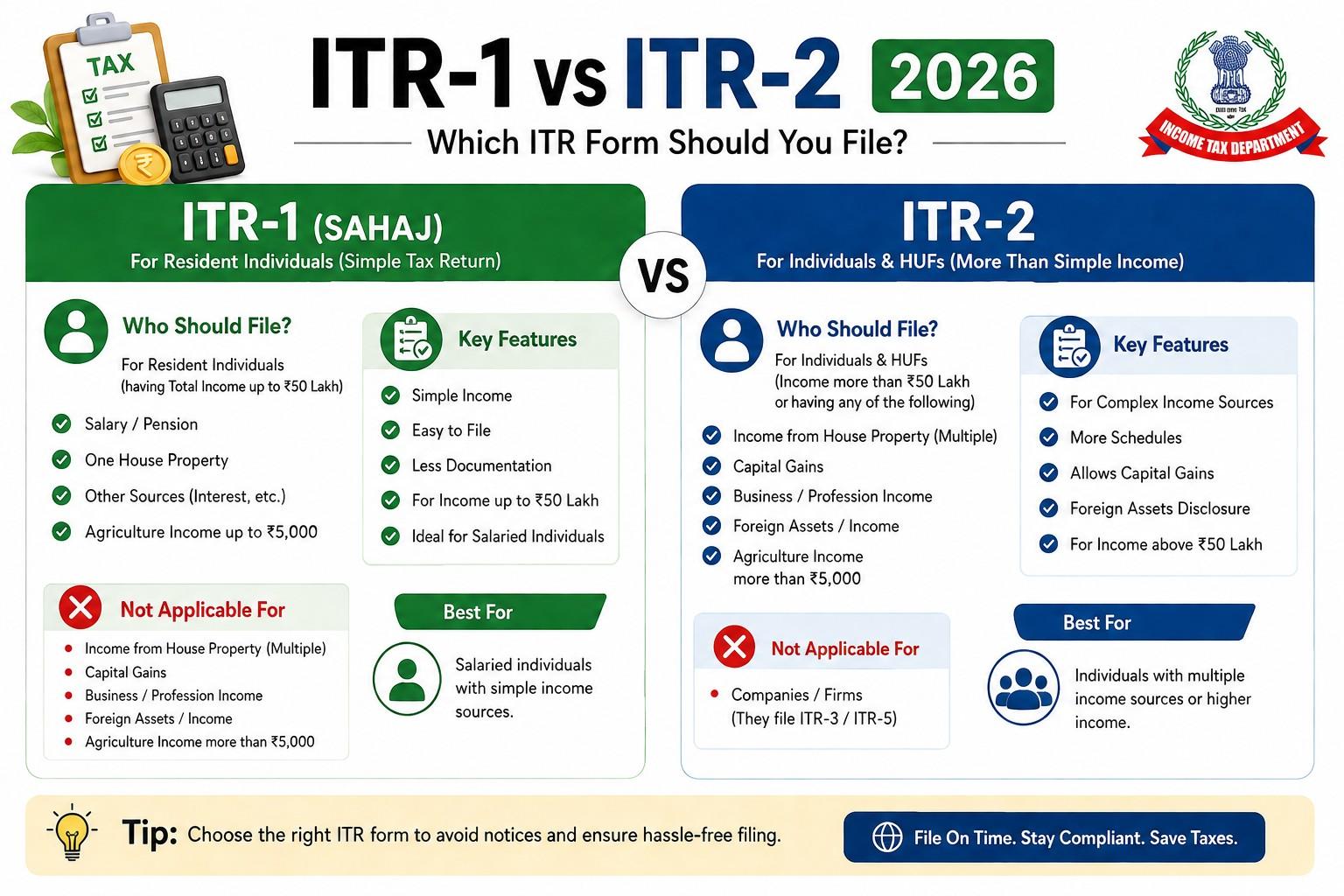
ITR-1 vs ITR-2: Which One Should You File in 2026?
60-second decision tree for choosing between ITR-1 (Sahaj) and ITR-2 for FY 2025-26 — income limits, who qualifies, what disqualifies you, and common filing mistakes.
PAN Card Apply Online 2026: Free vs Paid Methods Explained
Get an Indian PAN card in 10 minutes for free, or pay ₹107 for the physical card — full step-by-step for both, plus the ePAN trick most online services don't tell you about.