
Iran–US–Israel Conflict 2026: Are 'World War 3' Predictions Real?
What's actually happening in the Iran–US–Israel triangle in 2026, why the 'World War 3' framing is mostly wrong, and what the real escalation risks look like — explained for Indian readers.
What's actually going on
In 2026, the Iran–Israel confrontation has moved from a long shadow war into a sustained regional conflict. The shape of it: direct missile and drone exchanges between Israel and Iran for the first time in history (starting in April 2024), an ongoing fight in Lebanon between Israel and Hezbollah, Houthi attacks on Red Sea shipping, periodic US strikes on Iran-aligned militias in Iraq and Syria, and a cold-war-style standoff between the US Fifth Fleet and Iranian forces in the Gulf.
This is serious. It has reshaped global oil markets, disrupted ~12% of global shipping (the Red Sea is normally a shortcut to Europe), and killed tens of thousands of people in Gaza, Lebanon, Yemen, and Syria.
It is not, however, World War 3. That label gets used loosely on social media because it travels well in a feed; serious geopolitical analysts do not use it.
Why "World War 3" is the wrong frame
A world war, in any historically meaningful definition, requires multiple great powers fighting each other directly. WWI and WWII both saw Britain, France, Germany, Russia, the US, and Japan all engaged in direct military action against one another's homelands or fleets.
What's happening now does not fit that:
- The US and Russia are not fighting each other. Russia is bogged down in Ukraine and has limited bandwidth for the Middle East beyond diplomatic posturing.
- The US and China are not fighting each other. China imports Iranian oil but has refused to provide military aid; its public posture is to call for de-escalation.
- Iran's allies (the "Axis of Resistance" — Hezbollah, the Houthis, Iraqi militias, Hamas) are sub-state actors, not great powers.
- Israel is a US ally but operates with significant strategic autonomy.
The conflict's geography is also bounded. Fighting takes place in Israel, Lebanon, Gaza, the Red Sea, and through limited cross-border exchanges with Iran. There has been no fighting on European, North American, East Asian, or African soil.
This is a regional war with global economic spillovers — closer to the 1980s Iran–Iraq War, the 1991 Gulf War, or the 2003 Iraq War than to a world war.
What India actually has at stake
India has four direct, measurable exposures to Middle East escalation — each of which moves with the conflict's intensity, regardless of the "world war" label.
1. Oil price exposure
India imports roughly 87% of its crude oil consumption. The current Indian crude basket in 2026 sits around $80–95/barrel; an Iran-specific escalation routinely adds $5–15. Each $10 sustained spike costs the Indian government roughly ₹1.4 lakh crore in extra import bills, directly feeding into petrol and diesel prices, the rupee's value against the dollar, and inflation.
2. The Strait of Hormuz
About 20% of global oil consumption — and the majority of India's Gulf imports — passes through the 39-km-wide strait between Iran and Oman. Iran has periodically threatened closure; it has never actually closed the strait, because doing so would cut off Iran's own oil exports (China takes ~50%) and almost certainly trigger US naval action.
The realistic disruption modes are smaller: limpet mines on tankers, targeted seizures of Western-flagged ships, GPS spoofing. These have all happened in 2024–2026 and add a 5–15% war-risk premium to insurance costs that flows back to Indian consumers.
3. The Indian diaspora
About 9 million Indian citizens live and work in the GCC countries (Saudi Arabia, UAE, Qatar, Kuwait, Bahrain, Oman). Another ~150,000 live in Israel and Lebanon. They send home about $40 billion in remittances every year — roughly half of India's total inflow.
In any major escalation, the Ministry of External Affairs runs contingency evacuation plans (Operation Ajay was the October 2023 evacuation from Israel; Operation Kaveri was the 2023 Sudan evacuation template). These are operationally complex and expensive — but they work.
4. India's strategic ties to all three sides
India has working relationships with all three principals:
- Israel — a major defence supplier, including drones, missile systems, and electronic warfare gear
- Iran — Chabahar port (India's strategic alternative to Pakistan's Gwadar), Indian oil purchases (heavily reduced post-sanctions but still active)
- United States — the QUAD alliance, defence-tech transfers, the iCET initiative
The Indian government has navigated this with a posture often called "strategic autonomy" — declining to side publicly with any one party while preserving working ties with all. It is the foreign-policy equivalent of walking a tightrope, and so far it has held.
The actual escalation paths to watch
If you want to track this conflict seriously rather than via doom content, these are the four scenarios analysts genuinely worry about:
| Path | Probability (12 mo) | Severity |
|---|---|---|
| Hezbollah unleashes 150K+ missile arsenal in Israel-Lebanon war | Medium | High |
| US/Israeli strike on Iranian nuclear enrichment facility | Medium | Very high |
| Iran formally closes Strait of Hormuz | Low | Catastrophic for oil |
| Houthi attack on US carrier group | Low | High; could trigger regional war |
| Direct great-power involvement (China/Russia kinetic) | Very low | World-war-level |
The first three are tail risks that have non-trivial probabilities. The last is the actual "WW3" scenario, and it remains very low probability in any serious assessment.
What you should actually do
If you're an Indian household:
- Watch oil prices, not headlines. The petrol pump is the most honest signal of how much the conflict is costing you.
- If you have family in the GCC, register with MEA Madad. The government's consular assistance portal is how evacuations get organised.
- Don't change your investments around geopolitical news. The long-run history of regional Middle East conflicts shows Indian equity markets recover within 60–90 days of a shock.
- Reduce algorithm exposure to "WW3" content. It is engineered to be alarming, not informative. Reuters, the Economist, and the Carnegie Endowment for International Peace are better signals.
Bottom line
The Iran–US–Israel triangle in 2026 is the most consequential regional conflict of the decade. It is reshaping oil prices, shipping routes, Indian strategic posture, and millions of lives. It is also, specifically and importantly, not World War 3.
Treat the actual escalation paths seriously. Treat the YouTube thumbnails like the entertainment they are.
For the broader picture of how India navigates great-power conflict, see our companion pieces: Russia–Ukraine and India's neutrality dividend, China–India LAC tensions 2026, the Quad explained, and India's Indo-Pacific strategy.
Frequently asked questions
No. Despite viral social media framing, no serious military analyst, foreign-policy think tank, or government in 2026 describes the current Iran–US–Israel situation as 'world war.' What's happening is a regional conflict between Israel and Iran's proxy network (Hezbollah, the Houthis, Iraqi militias), with the US providing intelligence, air defence, and limited strike support. A world war would require great-power confrontation between the US, Russia, and China — none of which is currently engaged kinetically.
Vikas
Founder & Editor
Founder of Bharat Sarvaseva. Writes on Indian taxes, government schemes, and citizen services with a focus on actually getting things done.
Related reading
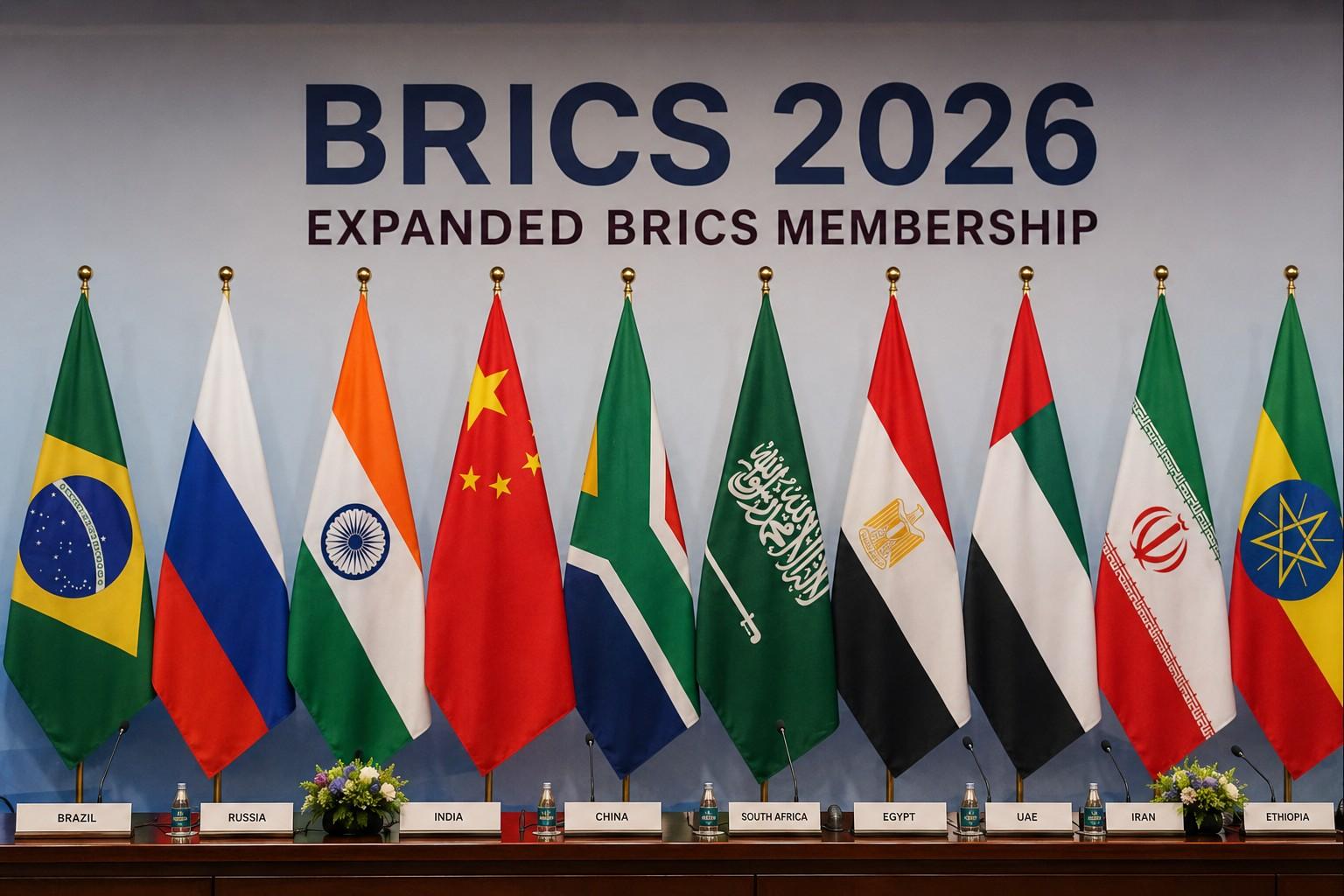
BRICS Expansion 2026: What India Actually Gets (and What It Doesn't Want)
How BRICS grew from 5 to 10+ members, why India agreed despite reservations, the 'BRICS currency' that isn't happening, and what India will and won't accept from the bloc.
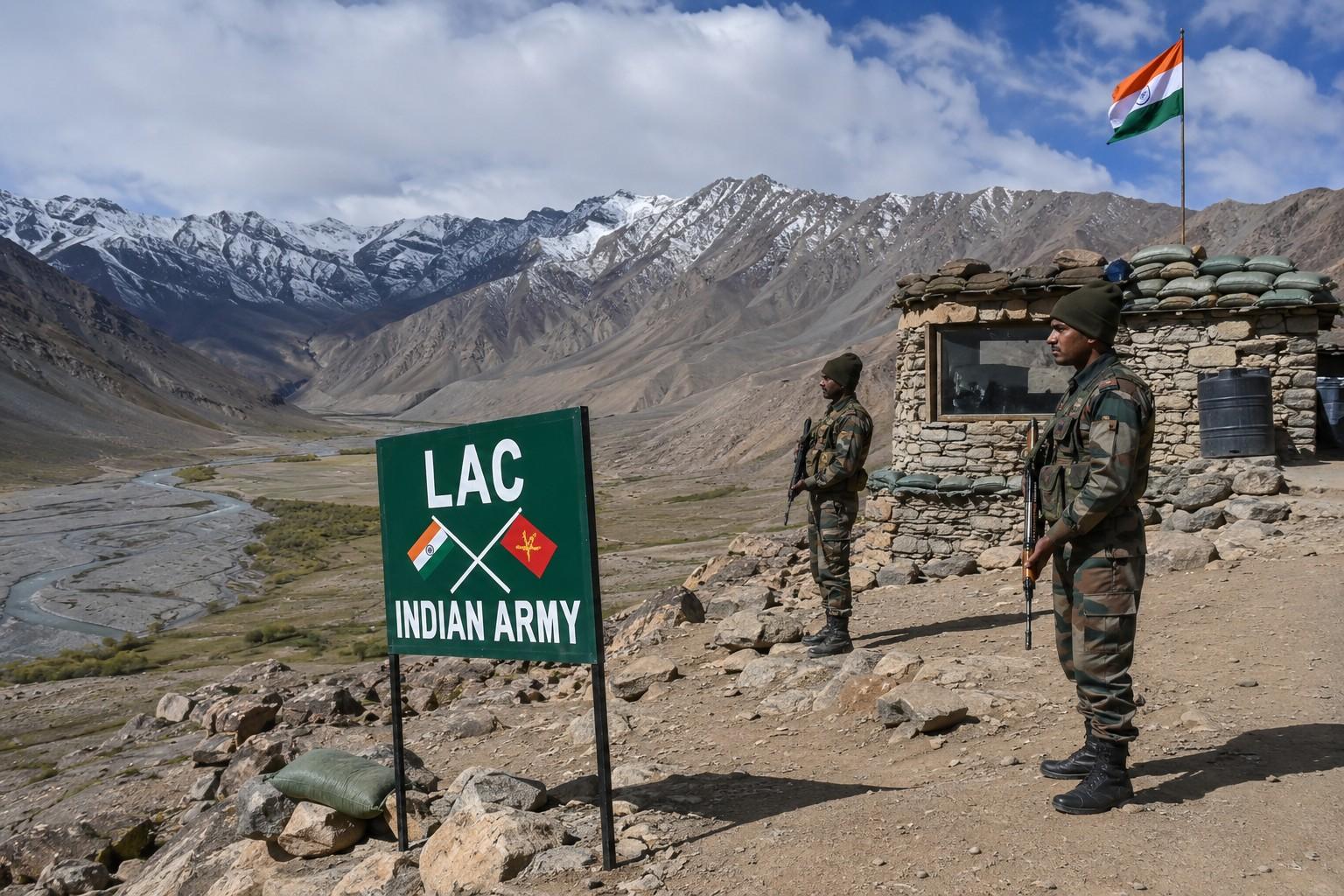
China–India LAC Tensions 2026: What's Actually Happening on the Border
Where the China–India border standoff actually stands in 2026 — the four friction points still active, disengagement vs de-escalation, and what 'managed rivalry' costs India.
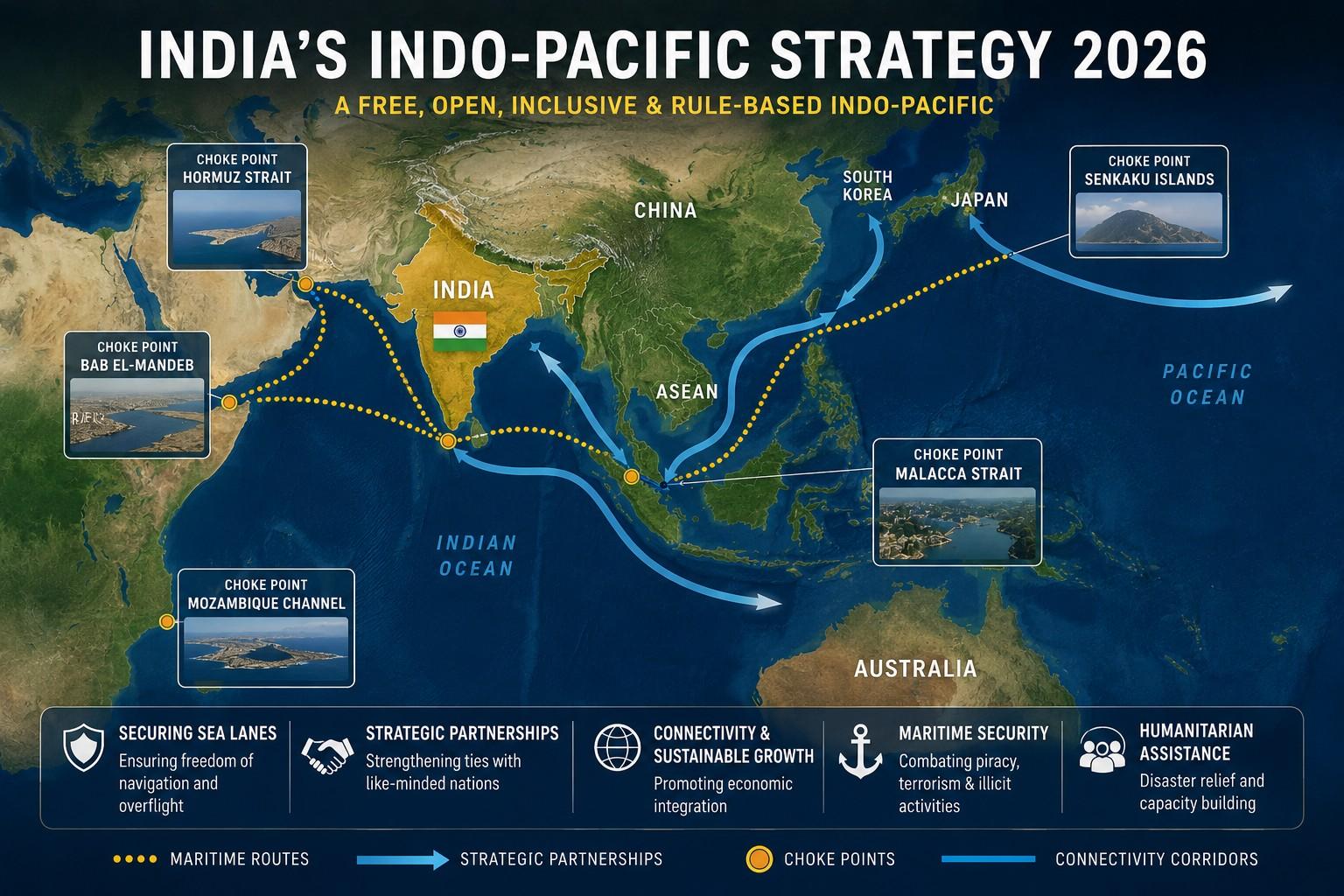
India's Indo-Pacific Strategy 2026: SAGAR, IMEC, and the New Maritime Map
Why India switched from 'Asia-Pacific' to 'Indo-Pacific', what SAGAR and IMEC actually do, and how India's maritime strategy now stretches from Mozambique to the South China Sea.